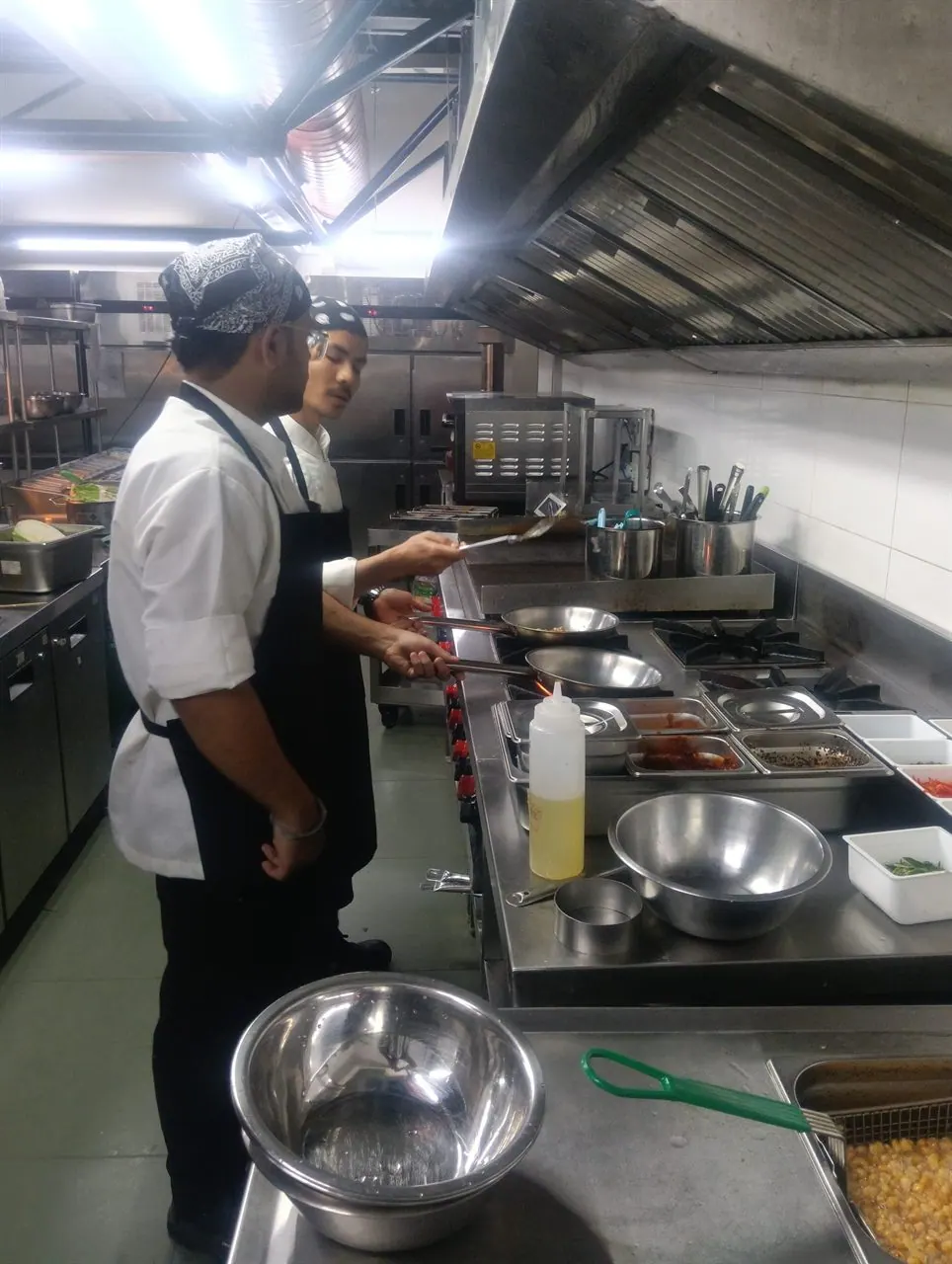
1. Start with the menu, capacity and kitchen layout
A reliable comparison begins before you contact a supplier. Prepare your menu, expected covers or orders per day, peak service volume, available floor area and preferred workflow. A cafe with sandwiches and beverages needs a different cooking and refrigeration mix from a South Indian restaurant, hotel banquet kitchen or institutional canteen.
Mark LPG or PNG points, electrical load, drainage, water supply, fresh-air entry and the possible exhaust route. This prevents a quotation from becoming a generic product list. It also helps the manufacturer size burners, chillers, sinks, preparation tables and hood sections for the actual operation.
Information to share before asking for a quote
- Menu and expected daily or peak production
- Kitchen drawing with clear dimensions and door locations
- Gas, power, water and drainage points
- Required cooking, preparation, washing, refrigeration and storage zones
- Delivery location, floor access and installation constraints
2. Verify stainless-steel grade and fabrication details
“Stainless steel” alone is not a complete material specification. Ask which components are proposed in SS 304 and whether another grade is used for frames, backs, internal supports or non-food-contact areas. SS 304 is widely selected for preparation tables, sinks, shelves, racks and counters because it resists corrosion and supports hygienic cleaning, but performance also depends on construction and finishing.
Inspect welded joints, folded edges, reinforcement below working surfaces, leg stability, adjustable feet, sink slopes and drainage. Surfaces should be accessible for cleaning, and sharp exposed edges should be avoided. For custom fabrication, approve a dimensioned drawing or written specification before production.
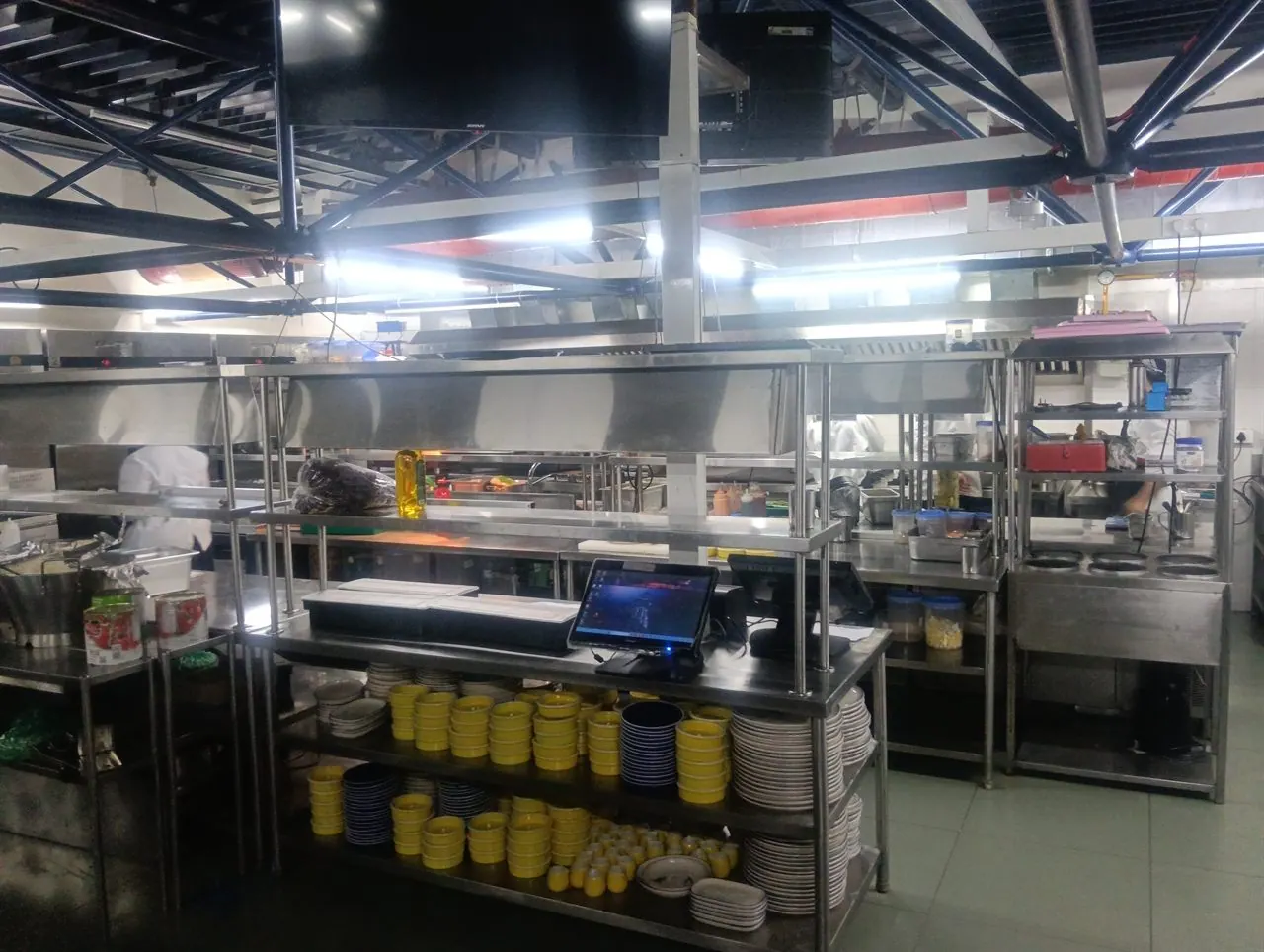
3. Compare the complete equipment scope
A commercial kitchen operates as one connected system. Comparing only the cooking line can leave gaps in preparation, cold storage, washing or ventilation. Organise the equipment list by zone and confirm responsibility for every item.
| Zone | Typical equipment | What to verify |
|---|---|---|
| Cooking | Gas ranges, dosa plates, fryers, tandoors, steamers | Burner capacity, vessel support, controls and service access |
| Preparation | Work tables, sinks, racks, mixers and cutters | SS grade, dimensions, shelves, splashbacks and workflow |
| Refrigeration | Vertical chillers, freezers and make-line counters | Temperature range, capacity, door layout and ventilation clearance |
| Washing | Single, double or three-sink units and drain gratings | Bowl size, drainage, landing space and cleaning flow |
| Exhaust | Hoods, filters, blowers and GI ducting | Cooking heat load, hood coverage, airflow and duct route |
Review our commercial kitchen equipment catalogue for individual product configurations and the commercial kitchen setup services page for planning, fabrication and exhaust scope.
4. Compare quotations line by line
The lowest total is not automatically the best value when two quotations describe different materials, sizes or services. Ask each vendor to show equipment name, dimensions, quantity, material grade, key construction details, included accessories, taxes, freight, installation and warranty separately.
Questions that expose unclear quotations
- Are dimensions and quantities fixed in writing?
- Which parts are SS 304 and which are another material?
- Are electrical or refrigeration brands and ratings specified?
- Do prices include delivery, positioning, installation and testing?
- Who supplies gas manifolds, ducting, electrical cabling and civil openings?
- What is excluded, and what can change after a site visit?
5. Check manufacturing, delivery and after-sales support
Local coordination matters when equipment must fit an active construction site. Confirm the drawing-approval process, estimated production window, pre-dispatch inspection, delivery access and the person responsible for installation coordination. For refrigeration and powered equipment, ask how service requests and replacement parts are handled.
References, workshop photographs and completed-project images can help you assess capability, but they should support—not replace—a clear technical quotation. If possible, inspect a representative product or visit the fabrication facility before a large order.
Frequently asked questions
How do I choose a commercial kitchen equipment manufacturer in Bangalore?
Compare material specifications, fabrication quality, capacity planning, quotation clarity, project coordination, warranty and local service response. The supplier should understand your menu, site and utilities before finalising the equipment list.
Is SS 304 suitable for restaurant kitchen equipment?
SS 304 is commonly preferred for food-contact preparation, washing, storage and service equipment because of its corrosion resistance and cleanability. Confirm which parts of each product use SS 304.
Can equipment be fabricated to custom sizes?
Work tables, sinks, racks, counters, shelves and exhaust hoods are often customisable. Approve dimensions, shelf positions, splashbacks, cut-outs and utility clearances before production.
What should a complete kitchen quotation include?
It should identify every item, quantity, dimensions, material, major components, accessories, taxes, freight, installation, warranty, exclusions and delivery terms.